
How To Build A Dry Stone Wall

  Tools and Materials: Hammer, Folding Ruler, Carpenters Level, Pick & Shovel, String Line,        Selected Stone

  First Calculate Amount of Stone Required:

Determine the length, the height, and the width of the wall in feet.  If the wall is two feet high or less, build your wall about one foot wide.  To assure a structurally sound wall higher than two feet, make sure the base of the wall is equal to half of the height.

  Next calculate how much stone is needed.  Suppose the wall is 45 feet long, two feet high, and one foot wide.

        45 x 2 x 1 = 90 Cubic Feet of Wall

  One ton of stone will build about 15 cubic feet of wall

        Divide 90 Cubic Feet by 15 Cubic Feet per Ton = 6 Tons of Stone

  About six tons of stone will complete this project.  Purchasing a little extra for good selection is helpful but not necessary.

  Next Construct Your Wall:

Dig a trench about 12 wide or wider depending on the selected stone.  Be sure the trench is at least 3 deep for walls two feet and less, up to 6 deep for walls four feet height.  No footing is required with dry stone walls.

  Place your largest stone in the trench as tightly as possible.  Lay all stones flat and level.  If there is a slope to your wall, be sure to begin the wall at its lowest point of elevation.

  As you begin to build your wall, be sure to avoid continuous horizontal and vertical joints.  This type of joint is unsightly and less structurally sound.

  Place the stones tightly together, and fill in behind your wall with dirt or gravel and compact it as you go.

  As the wall rises in height, be sure to batter or slope back the wall no more than 2 for every foot of height.  To batter the wall, stand level on end and measure the face of the wall.

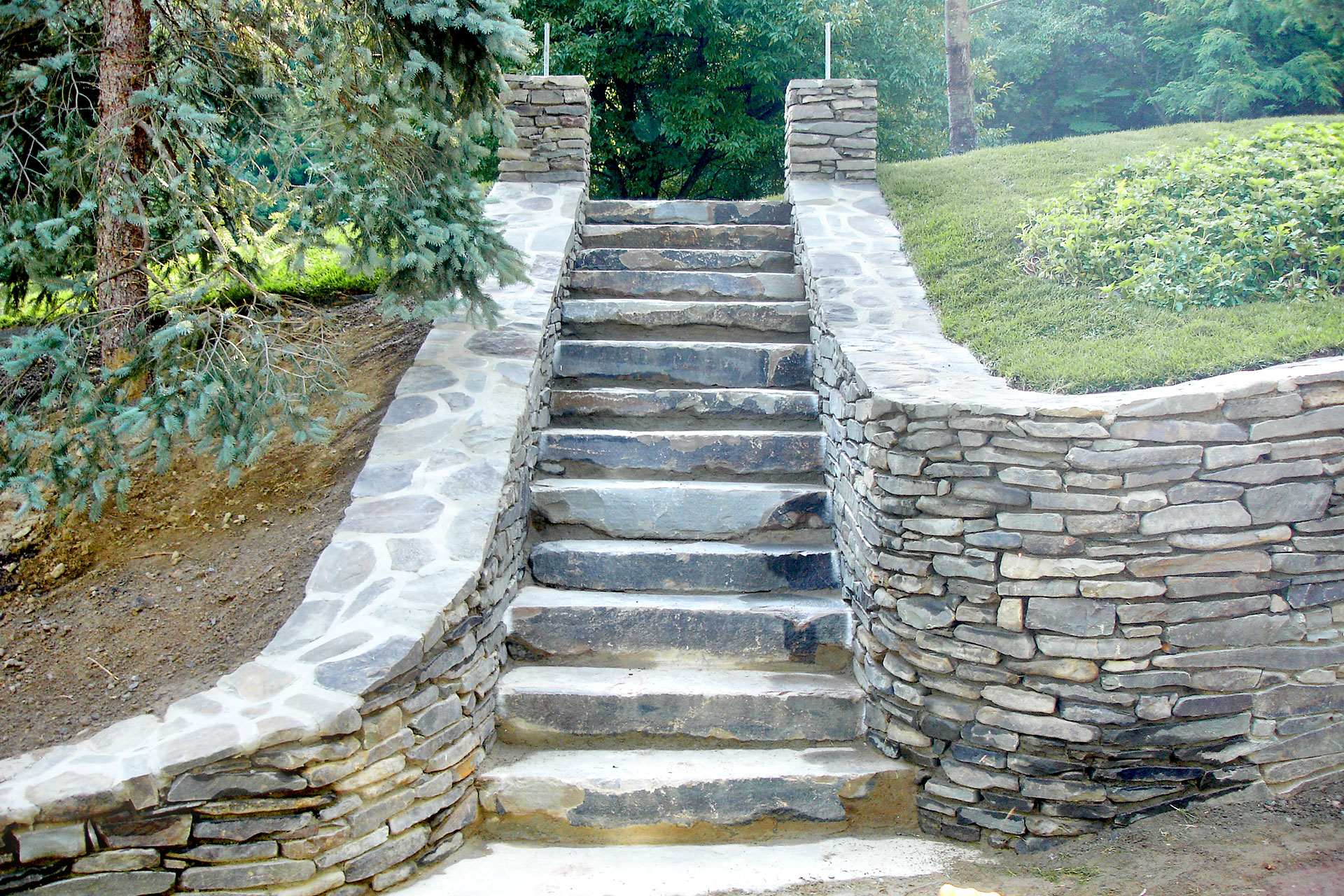
  When building a dry stone wall that will retain a grade or sloped hill, be sure to use some of the stones as bond stones.  This is accomplished by turning a long stone into the hill every now and then.  This will help anchor and stabilize the wall for better durability.

  For best appearance, save some of the nice flat stones to cap off the top of the wall.